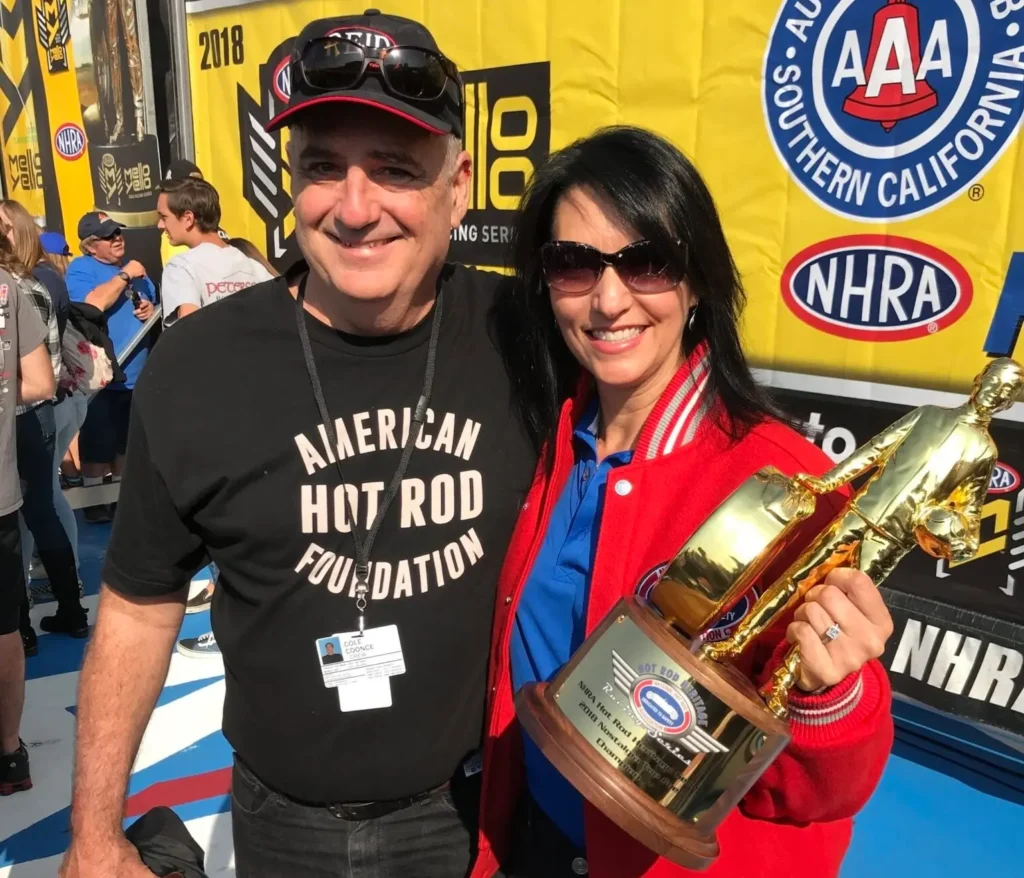
INTERVIEW WITH COLE COONCE, THE DIRECTOR OF TIME TRIALS
Q: When did you meet/then marry Mendy?
Cole Coonce: I met Mendy in the press parking lot at Bakersfield during the 2000 March Meet. I wrote a story on her (“Drag Princess”) that ran in the LA Weekly in 2005. She came to my house for a poker game in 2007 and was the last card player to leave by about 36 hours. We got married in 2016.
Who financed this (film)? Who shot it?
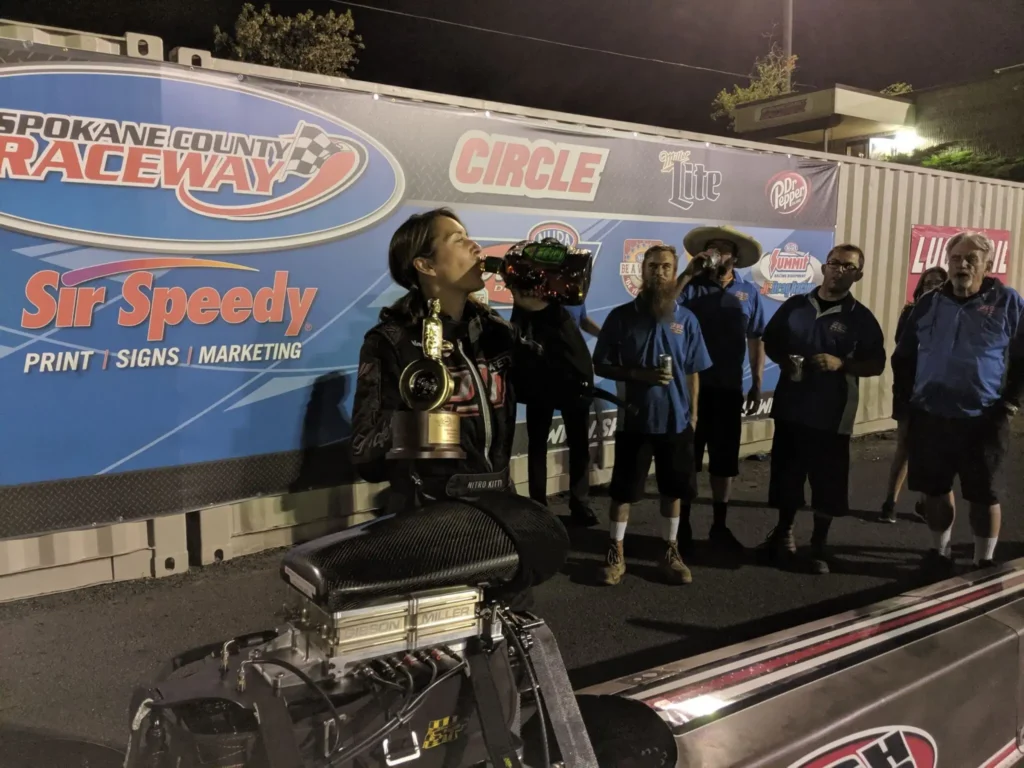
CC: From 2017 through 2020 (when the lockdown hit), I was hired to produce and direct race coverage of the NHRA Heritage Series Nostalgia Top Fuel class (aka “AA/Fuel Dragsters”), with the goal of streaming those shows on YouTube and on deep cable (MAV TV and Fox Sports 2). That initial financing came from two of the deeper pockets running Heritage Series Top Fuel cars, Bob McLennan with the Champion Speed Shop and Tom Shelar with the High Speed Motorsports entry. Coincidentally, this is the class my wife was competing in.
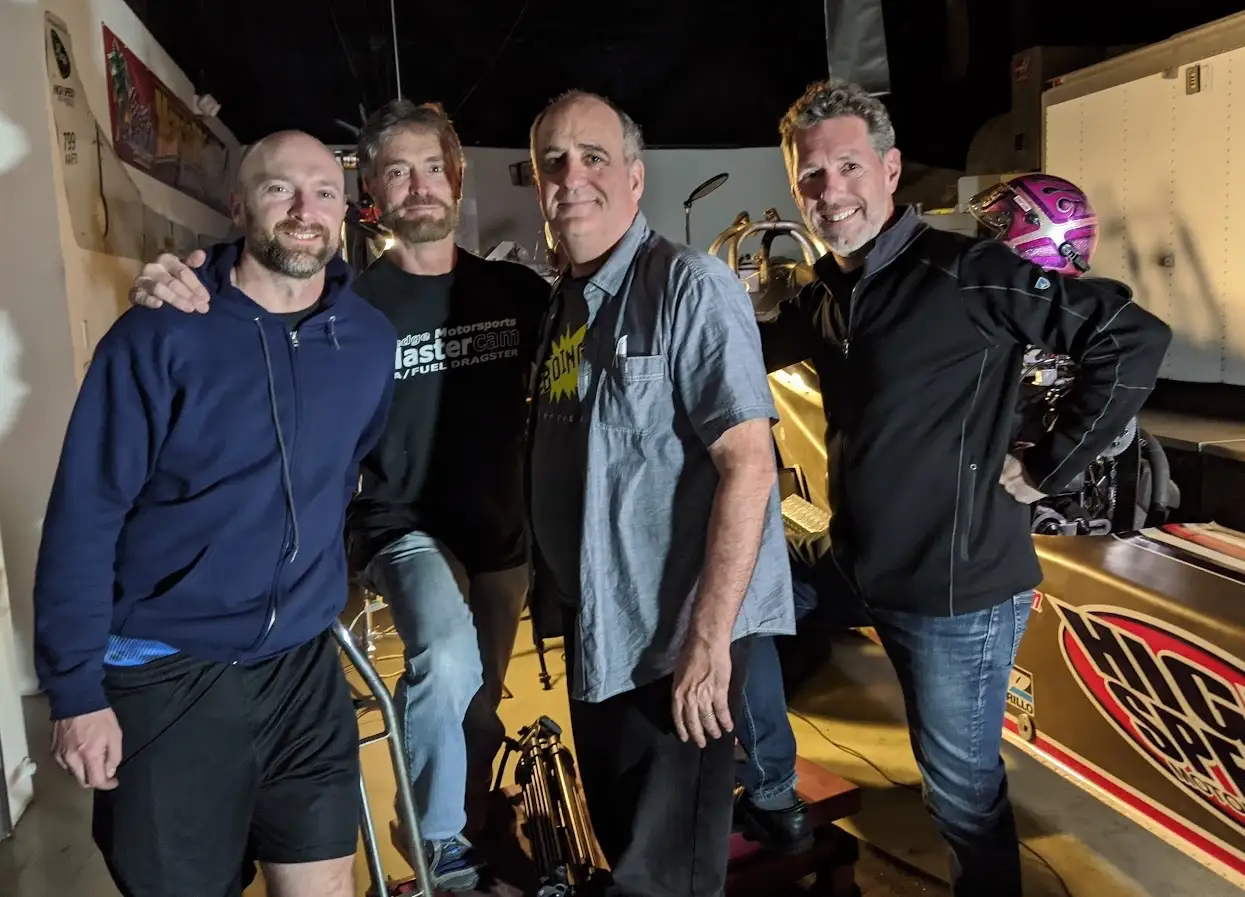
Those shoots gave us total access to the teams while in the heat of battle and in unguarded moments. As often as not, the production crew was ace lensman/drag-racing obsessive Les Mayhew (who kept the cars in focus for a 1/4-mile and another 1/2 mile while they slowed down), Whit Bazemore (retired 2-time US Nationals Funny Car champion and renowned still photographer), and myself. It was a guerrilla production whose budget wouldn’t cover the cost of the catering at a network-produced race show.
Q: I loved how the shooter would just stand and wait while the emotions and scenes played out themselves with no prompting from him/her.
CC: Whit Bazemore is the camera operator beyond the finish line who let those candid scenes play out — as a Nitro Funny Car champion who had been set on fire more times than a methlab cook, he knew the intensity and emotional arc of those moments while the driver gathered up the parachute and gave the car owner a debrief on the run. Because of his history as a racecar driver, Whit’s subjects felt comfortable around him and were comfortable letting their guard down — that’s why those scenes come off as natural rather than a contrivance.
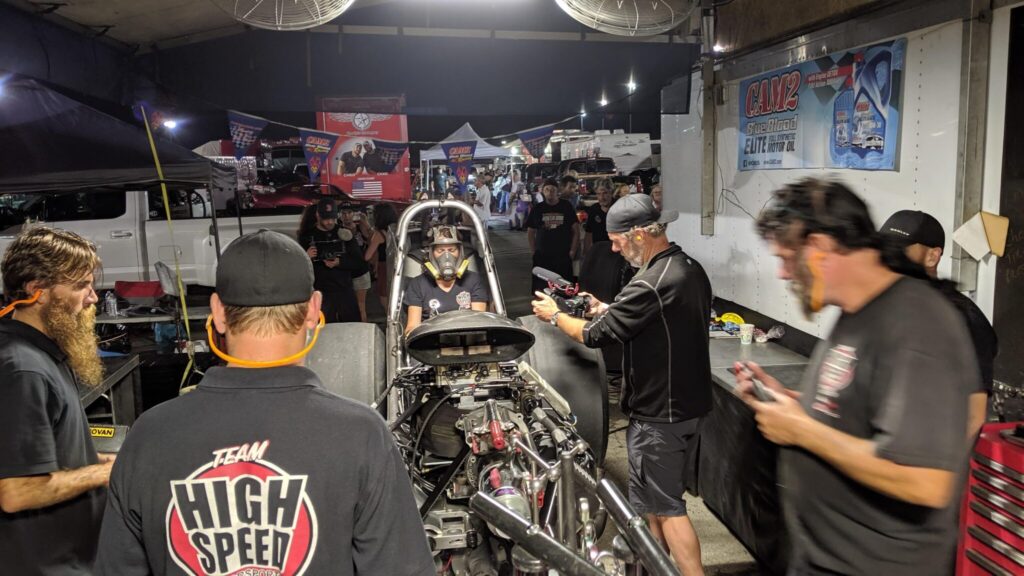
With that said, we didn’t know we were making a movie. We just thought we were shooting race coverage for the Internet and deep cable.
It wasn’t until that awful moment occurred near the end of the 2019 racing season that I realized we had the makings of a film. I wish that awful moment had never occurred and that we didn’t have a movie — but that’s not how it shook out.
Q: Who wrote it?
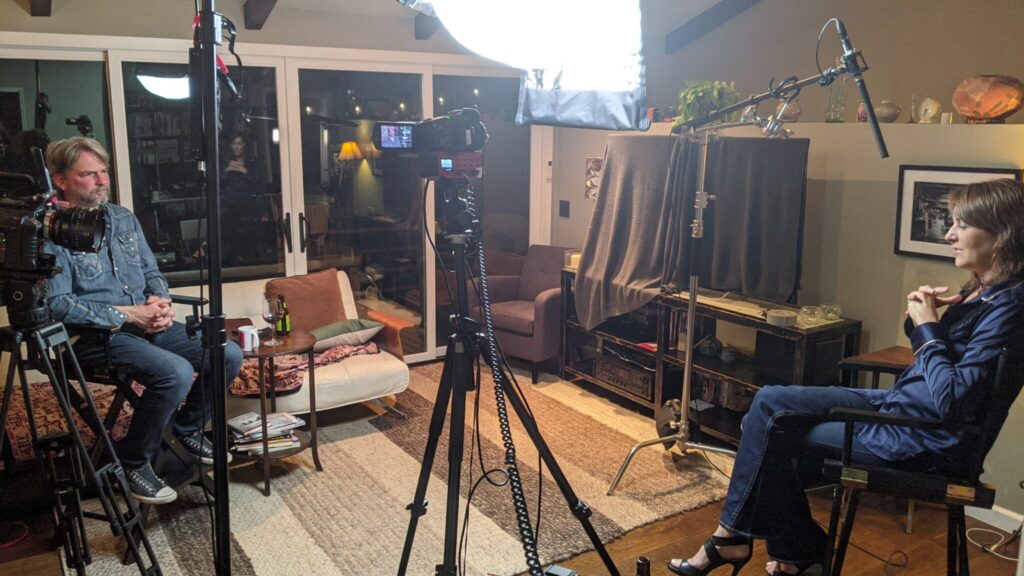
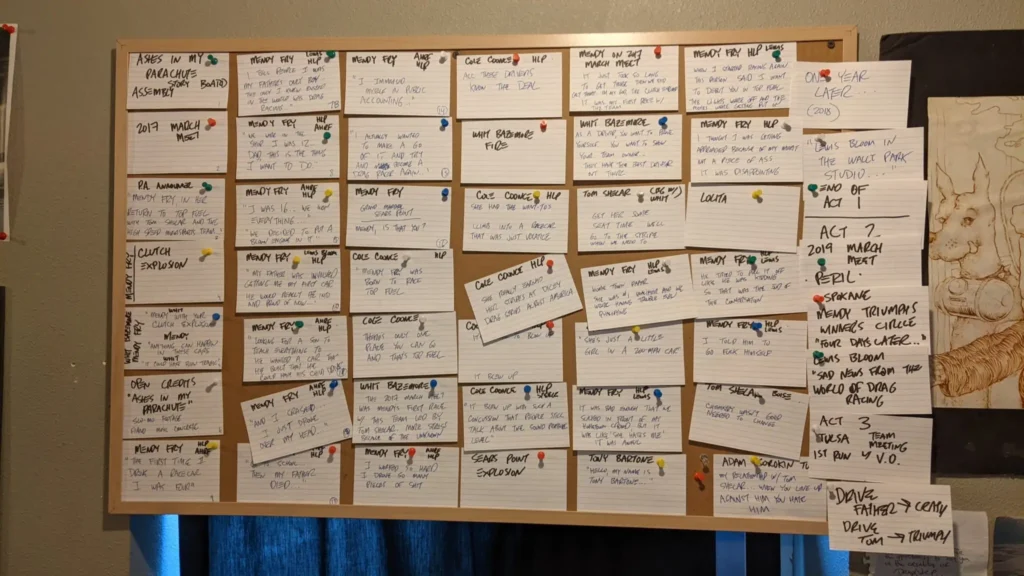
CC: I wrote and edited the film—but with trepidation. I didn’t want to exploit the tragic circumstances and I didn’t want to make a hagiographic puff piece on the film’s primary subject — who happened to be my wife. Still, I felt her story was worth telling: What’s it like to work your entire life toward achieving a goal only to have the unspeakable happen at your greatest moment of triumph?
You can imagine our dinner table conversations. Mendy had no input in the creative process but we both agreed that the movie had to show the good, bad, and ugly in her story and quest as a racecar driver — the foibles and the foul-ups as well as the conquests.
We both agreed it had to be real. I had to show her stinking up the joint as well as showing the boys the way home.
Q: How did the finances go — that is, who paid for the team, who paid for the filming, and was Mendy paid to drive?
CC: So… money. The finances of driving a Top Fuel Dragster in the Heritage Series circuit are similar to that of Nolan Siegel with McLaren in IndyCar or Lance Stroll with Aston Martin in F1: The driver is often expected to “bring budget.”
Mendy isn’t made of money and never agreed to “pay-to-play” with any team she raced with — that, in itself, was a minor financial windfall.
Tom Shelar hired her on merit — and for her ability to keep ego and drama to a minimum.
Q: An operation like that must have cost a lot of money, where’d everybody’s incomes come from?
CC: All of these Heritage Series Top Fuel teams are self-financed, and the car owners are usually successful businessmen with disposable income. You know the saying? “In drag racing, you have to hate money and love work.”
Similarly, with the years it took to complete the film because of conducting interviews, producing the score, and sifting through years of race footage to inform the daunting task of editing and mixing this beast, I am probably 50k into actual costs and 500k into sweat equity. Despite the lack of a proper budget, I endeavored to make an underground cult racing film. Over mini-mall sushi one day during the last days of the lockdown, Les Mayhew and I discussed the models for TIME TRIALS. We agreed that two of the best racing films were LeMans and Two-Lane Blacktop — two flawed movies that flopped at the box office and killed both directors’ careers. But over fifty years later, we’re still talking about those films — and I have no career to kill. “So let’s make a movie like that!”